Introduction

Govardhan Math, also known as Govardhan Peetham, is one of the four cardinal Amnaya Peethams (monastic seats) established by Bhagavatpada Adi Shankaracharya approximately 2,500 years ago. It is situated in the holy city of Puri (Purushottam Kshetra), in the state of Odisha, on the eastern coast of India.

The Math holds a position of immense spiritual and philosophical significance. It is the Peetham of the East, presiding over the regions of Bengal, Odisha, Assam, Bihar, Jharkhand, and the northeastern states, extending its spiritual jurisdiction to Nepal and beyond.

"प्रज्ञानं ब्रह्म" — Prajñānam Brahma — Consciousness is Brahman

Key Attributes of the Peetham

Veda

Rigveda

Mahavakya

Prajñānam Brahma

Presiding Deities

Lord Jagannath (Bhairava)
Goddess Vimala (Bhairavi)

First Acharya

Sri Padmapadacharya

The Sannyasa Tradition

Sannyasis initiated into the Govardhan Math order bear the dasanami titles of 'Vana' and 'Aranya'. The Brahmachari (pre-initiation) title is 'Prakash'.

This systematic organization by Adi Shankaracharya ensured a disciplined and unbroken propagation of Advaita Vedanta philosophy across centuries. The Math has produced some of the most illustrious spiritual leaders and scholars in Indian history.

The Four Peethams

Adi Shankaracharya established four Amnaya Peethams in the four cardinal directions of India to preserve and propagate the wisdom of the Vedas:

East: Govardhan Math, Puri (Rigveda)
South: Sringeri Sharada Peetham (Yajurveda)
West: Dwaraka Sharada Peetham (Samaveda)
North: Jyotirmath, Badrinath (Atharvaveda)
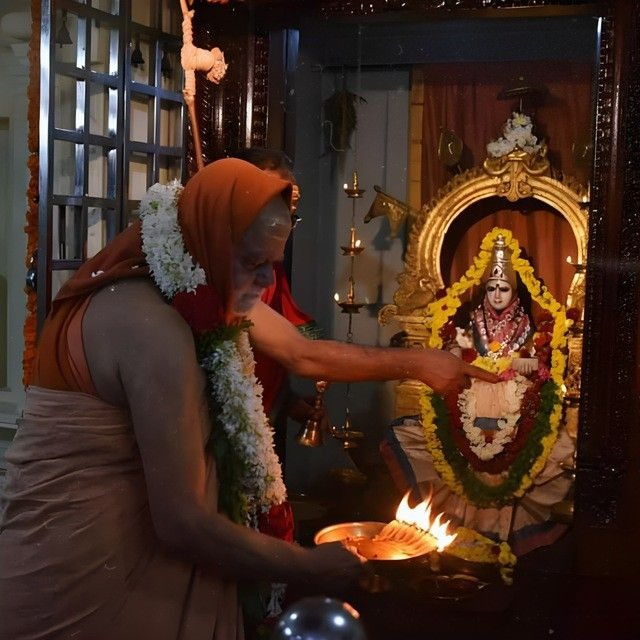
Shankaracharya offering prayers at the sacred shrine
Jagadguru Shankaracharya delivering a discourse on Vedanta